ORDER
“ORDER”
Ostia, transfer habitat in the Titan system
2127
The dock on Ostia’s axis had no floor, because there was nothing to call one. Lieutenant Elias Mertens hung by the wall of the transporter’s cargo bay, one hand on a grip, the other counting sacks.
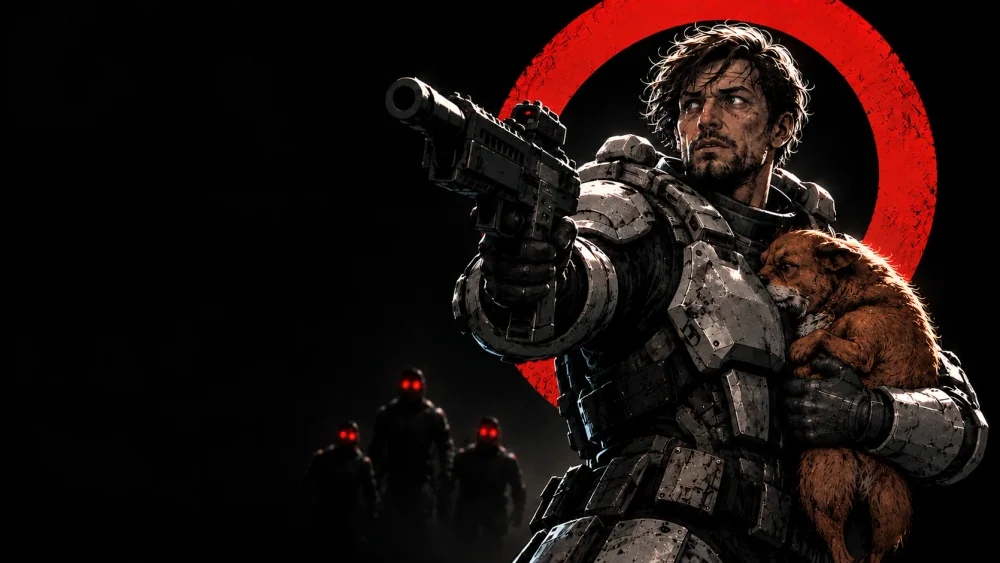
Fourteen. Each the size of a loaf of bread, vacuum-sealed, with a label: SUPPORT KIT — MINOR — BATCH 0419. Through the film you could see brown fur crushed flat and two button eyes pressed into the plastic like faces against a window. Once the sack was torn open, the bears took in air within seconds. Mertens had tested it a dozen-odd times in training. The instructor said a child should see that moment, because something that grows in your hands soothes.
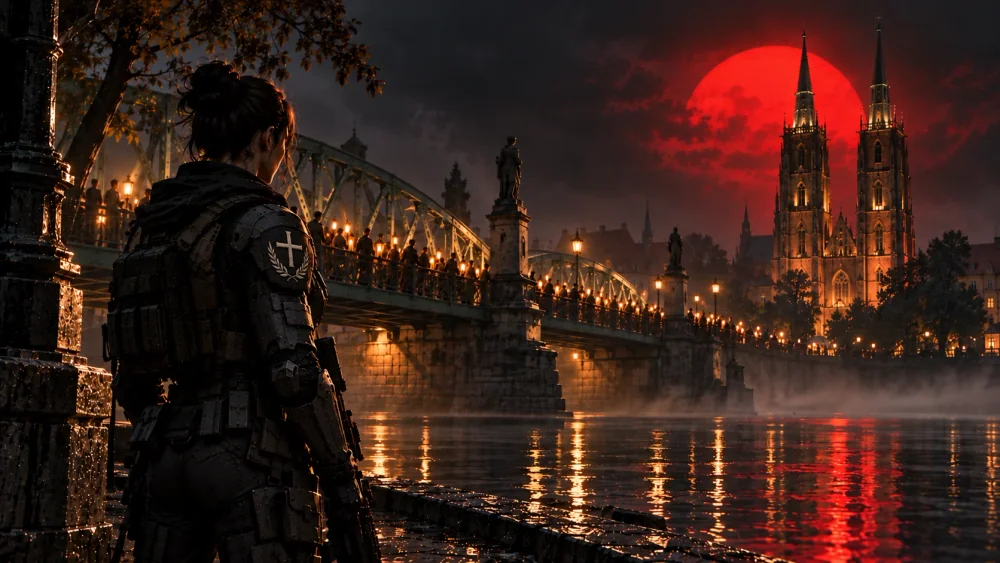
Saturn showed through the porthole. From this distance three fingers of an outstretched hand covered the sphere, while the thin line of its rings reached far beyond the palm. The Sun here was a bright dot: by its light you could read, but it warmed nothing. The dock did not rotate with the habitat ring. The bearing between them droned in one even tone, which Mertens felt in his teeth more than in his ears.
They had left New Rome at 07:50 ship’s time. About the destination they knew only what the flight order said: Ostia, special transport, no cargo. The order itself would come on arrival, and in two and a half hours of flight no one guessed aloud. For the last forty minutes they approached Ostia without haste, the way any freighter does. They docked at 10:22. Traffic control assigned them berth three and wished them a good shift. At berth two stood a tug with a name written on its hull by hand, “Granny Zosia”, with a flower painted in place of the dot over the “i”. At berth one stood nothing. For a month nothing had come in from Concordia.
He stuffed the sacks into the chest bag, three to a pocket, two in reserve. Counted again. Fourteen.
Beside him two Templars were checking their weapons. They did it in zero gravity the same way as on Earth, only slower: every part they detached stayed in the air by their hands, exactly where they had let go of it. The younger one whispered articles of the regulations under his breath, in order, the way other people count their breaths. Mertens heard the numbers over comms: three, four, seven. At seven the boy always slowed down, and then started again from the beginning.
Mertens was not a soldier in the sense that they were. For six years he had worked on the children’s ward of a hospital in Ghent, on night shifts, with children after accidents and after fires. When the first reports about Concordia came, the ones that still circulated before they stopped circulating, he volunteered. At the qualification interview he said that someone had to be with the children when the soldiers came. The panel wrote the sentence down in his file.
The training was run by a woman who had spent twenty years in centres for children after floods. She spoke quietly and never sat down. On the first day she handed out sacks of bears and told them to tear them all open at once, in the lecture hall, and then she watched thirty adults in uniform look at plush animals growing in their hands.
“You see,” she said. “Even you.”
Then for three weeks she taught them to kneel. In armour, out of armour, on a wet floor, on stairs. She taught them to wait. They knelt before a mannequin the size of a four-year-old, hand outstretched, and she counted aloud: one, two, three. A child has until ten to offer a hand on its own. Only after that do you take it. Someone in the back row reached out at seven. She made him start over, a hundred times, until he stopped reaching. She taught them sentences too. The sentences were short and every one of them was true.
In the last session someone asked what to say when a child asks about its parents. She answered that it depends on the outcome of qualification, and the outcome is not a matter for psychological support. Psychological support begins after the outcome. They wrote it down.
The briefing lasted four minutes. The Templars’ captain, tall, in white-and-silver armour, with a sword and olive branch on his pauldron, did not take off his helmet. On his collar was embroidered: NON ROGAMUS. EXSEQUIMUR. The thread had long since worn to grey. He spoke to them over comms, though they stood a metre apart.
“Basis: Procedure twelve, twenty-one twenty-seven. Secondary qualification of the entire population. Three weeks ago, within a forty-minute window, three pulses left the Ostia node on an unassigned band. Sender not established. Ostia is the last node that had contact with Concordia before Concordia went silent. The Asian Federation maintains reconnaissance ships in the sector. Last contact: five weeks ago, beyond Ostia’s range. The Working Group’s conclusion: the node has been taken over from within. The conclusion requires no proof. It requires qualification.”
Mertens wrote in his notes: “beyond Ostia’s range”. He asked nothing.
“Sequence: primary qualification at the table. Secondary according to correlation. The result is binding. Minors up to and including twelve years go to the sector’s asset pool, regardless of their parents’ result. Questions?”
No one had questions. The captain waited as long as the regulations required and added one more sentence, in the same tone, as if reading it from the same card:
“We do not establish guilt. We restore order.”
An order appeared on Mertens’s tablet. He read it the way he had been taught: from the header.
EXECUTION ORDER — PROCEDURE 12/2127
Ordered by: Working Group for Sector AC-115, Brussels
Chain of command: bypassed (urgent mode)
Facility: Ostia, transfer habitat
Population: 312
Basis: transmission correlation, unassigned band (3 pulses,
40-minute window, node night shift) — possible
infiltration (Asian Federation)
Overriding objective: continuity of the Earth–sector
information chain
Executor: subunit of the Templars Battalion, Rotation II
Psychological support: Lt. E. Mertens
Outcomes: EXCLUSION — termination of status, executed on
site; RESTORATION — transfer to the sector’s asset pool
Time on site: until the case is closed
Annex: list of minors (procedure criterion: up to and
including age 12)
He stopped at the second line. He had never before seen an order without the seal of the Space Forces. He reread the field “Overriding objective” and scrolled on.
The list held fourteen names, each with an age and a quarters number. The youngest child was two, the oldest twelve. Mertens read the names in order, half aloud, to memorise them. In training they had said that a name spoken without hesitation is the first thing a child trusts. Falmata, seven years old. Tomás, five. He repeated Falmata twice, because he was not sure of the stress. The list was dated the previous evening. Mertens decided that lists are prepared in advance, the way beds on a ward are made before night.
In his head he went through the instructions. Kneel. Head lower than the child’s head. Use the name. Do not say “everything will be fine,” because a child remembers lies longer than the truth. Say “you are safe,” because from the moment of handover that is true. Do not touch the face. Do not cover the eyes unless you have to.
The lift in the spoke was locked down for the duration of the procedure, so they went down by ladder. Then came stairs, and at the end an ordinary corridor with a floor. The first rungs they took with their hands alone, their bodies drifting behind like empty coveralls. Then their feet began to find purchase. Halfway down the armour’s assist engaged with a soft hiss and forty kilograms stopped weighing anything. Only the chest bag grew heavy. Fourteen sacks, each lighter than a loaf of bread.
Someone ahead of him dropped a glove. It did not fall straight but in a light arc to the side. The sergeant picked it up without a word.
The residential corridor smelled of bread and grease. Nameplates hung on the doors of the quarters, many handwritten, a few with cartoon stickers. In front of one door stood shoes, two adult pairs and one child’s, lined up neatly, toes to the wall. In the alcove by the hydrant someone was growing tomatoes under a lamp. The Templars walked down the middle, in two files, touching no walls. The doors of the quarters were open. The residents had left at the announcement and left everything as though they meant to be back within the hour.
At the end of the corridor was a day room. Behind the glass four children were building something from blocks on a carpet, under the eye of an older woman in a cardigan. The list said: quarters nine and fourteen, parents on shift in the hall. Mertens went in first, alone, took the rifle off his shoulder — he did not need it anyway — and passed it to the sergeant through the door. He knelt on the carpet. A two-year-old slept in the corner on a cushion. The oldest girl, twelve, stopped building and looked at him without blinking.
“We’re going upstairs, for a check-up,” the caretaker told the children, because that was what she had been told over the loudspeaker. “Your parents will follow.”
Mertens tore open four sacks, one after another, each beside a different child. The two-year-old got hers in her sleep, tucked under her arm. One of the Templars picked her up, cushion and all, and carried her toward the spoke carefully, the way you carry something that might spill. The other three followed, holding hands. The caretaker wanted to go with them. The sergeant said her place was in the hall and walked her there himself, politely, by the elbow.
Transfer Hall B was the largest space in the ring. Someone had made sure it was not cold. Along the walls stood containers labelled in three languages. On one of them someone had stuck a child’s drawing: a yellow sun, too big, the kind of sun that had never once been visible from Ostia. The residents had been gathered here before the docking, by an announcement over the loudspeakers, which Ostia had broadcast at Brussels’s direction: sanitary inspection, mandatory, short. The hall’s bulkheads had been sealed once the last group was inside, “for order in the queue.” They sat on crates and on the floor. Someone had brought thermoses. The children ran between the columns until they saw the helmets.
Two dockers were playing cards on an upturned pallet. They talked without raising their heads.
“Sanitary,” said one. “Sanitary against what?”
“Against Concordia,” said the other. “What else.”
“Nobody’s sick there. Nobody there has said a word for a month.” He threw down a card. “Silence on the band is not a disease.”
“You said that in the canteen.”
“Everyone said it in the canteen.” The first took the trick and tapped it against the pallet to square the edges. “Half of Ostia wrote home that something was wrong. I wrote to my brother. You probably did too.”
“In the canteen they also say it’s the Federation,” said the other.
“Who’s seen them here?” The first drew a card and winced. “You dealt, not me.”
The other did not answer. He looked at his cards. After a moment he said it was his turn and laid down a queen.
Before the queue began, a woman in a kitchen-staff coverall came up to Mertens, with a thermos and a plastic cup.
“Tea,” she said. “Milk from the culture tanks, but it’s drinkable. Will this take you long?”
“Thank you,” he answered. “I’m not allowed.”
“Regulations?”
“Regulations.”
She nodded, as if that explained everything, and went to offer some to the sergeant. The sergeant said thank you too, and declined. She went back to her crate and drank the cup herself, in small sips, holding it with both hands.
The Templars formed up in two ranks, without haste. The captain said over the loudspeaker that everything would go smoothly, that they asked for patience and for ID badges to be made ready. The people took out their badges. They lined up in a queue, because a queue was something they knew.
Mertens stood to one side, by the qualification table. Names scrolled across the terminal. Almost everyone got a green line and went back to their crate. Primary qualification: no symptoms. The loaders in the hall had numbers and nobody spoke to them. Mertens wrote that in his notes in a single sentence. The tug with the name was not in the hall, so he did not write it down at all.
An older man with a grey beard asked at the table whether ships from Concordia would keep arriving, because there had been no deliveries for a month and filter parts were running out. Mertens answered that he did not know the schedules. The man got a green line, went back to his crate and sat down heavily, hands on his knees.
After him came a couple with an infant in a carrier. The woman asked whether the inspection also covered vaccinations, because the baby was overdue. Mertens checked the list and found no name for the child. He looked at the date of birth in the “dependants” field on the mother’s ID. Four days ago. Ostia had not managed to register her. He tried to add her by hand, as the fifteenth. The terminal refused: field locked. The woman got a green line, hugged the carrier to her and walked away.
Mertens reported the discrepancy over comms. The sergeant replied that he had received it, and nothing more.
The queue moved on. A boy at the age when you are no longer a child and not yet anything else would not hand over his communicator for scanning. He held it with both hands against his stomach. His mother was explaining something to him; his father stood to one side, looking at the floor. One of the Templars stepped up, held out his hand and waited. He said not a word. He waited until the boy put the communicator on his gauntlet himself. The Templar held it to the reader, handed it back and returned to the line. The boy got a green line. He was seventeen years and three months old.
At the far end of the hall someone put on music from a communicator speaker, quietly, something with a guitar, and no one told him to turn it off.
After an hour there were many green lines. Then the terminal began to work more slowly.
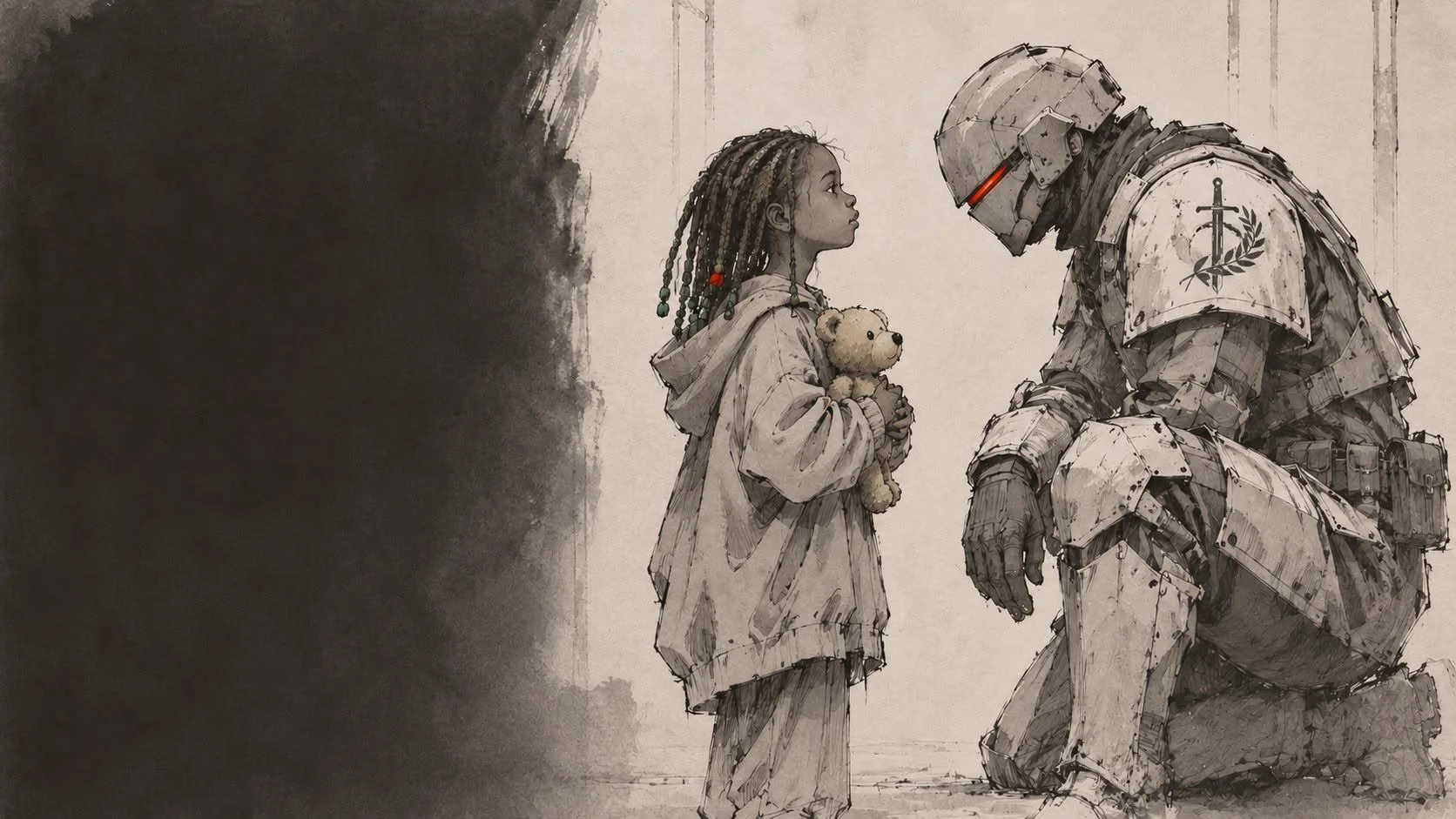
The girl wore a yellow sweatshirt two sizes too big and held her father by a finger, not by the hand, as if the whole hand were too big to hold. According to the list, seven years old. Her hair was braided in tiny braids, a bead at the end of each, several green, one red.
“Kyari,” said the father, handing over three ID badges. “Modu Kyari. Wife, Yagana. Daughter, Falmata.”
On his coverall he wore the logo of the communications and cargo service, faded from washing. Mertens glanced at the terminal. Post: transmission node operator, night shift. Length of service: eleven years. Latest assignments: reception and retransmission, sector AC-115.
Below, in smaller print, the terminal unrolled a list Mertens had not asked for. Retransmissions to private bands, last six weeks: three. Direction: Earth. Addressee: family. Content: archived, unavailable at this clearance level.
The father noticed where Mertens was looking.
“That’s to my sister,” he said. “She lives in Gdańsk. She wrote that on their news they say nothing. People ask what is happening with Concordia, and on the news there is weather. I wrote back what I know. Only as much as I know.”
“That’s not my part,” said Mertens, warmly. “I’m here for the children.”
Modu Kyari looked at his daughter and nodded. Then, as if remembering something, he reached into his pocket, took out a piece of chewing gum, broke it in half and gave his daughter one half. The other he put back.
“For later,” he said to her. “When this is over.”
The mother said something quietly to Falmata, in a language Mertens did not know. The girl shook her head and pointed to a bead on one of her braids.
“What is she saying?” Mertens asked. He smiled, as he had been taught, though no one could see it through the visor.
“To stop her playing with her hair,” the mother answered. “The beads come from her great-grandmother. From her great-grandmother’s great-grandmother. She brought them from Maiduguri, when it was still possible to live there. We have fewer and fewer.”
“Pretty,” Mertens said to the girl. “The red one is prettiest.”
Falmata looked at him, then at the red band of the visor, and hid behind her father’s leg.
A flag appeared on the terminal: CORRELATION — UNASSIGNED BAND — SHIFT MATCH. Beneath it a result bar that was not filling.
Mertens watched the bar. The father watched Mertens. Five seconds, maybe six. Somewhere in the hall someone laughed, someone was pouring from a thermos. The bar filled all at once, entirely.
SECONDARY QUALIFICATION — KYARI, M. — EXCLUSION
SECONDARY QUALIFICATION — KYARI, Y. — EXCLUSION
SECONDARY QUALIFICATION — KYARI, F. — RESTORATION
Under the results a single line unrolled in smaller print: TRANSMISSION WINDOW = NODE NIGHT SHIFT — OPERATOR: KYARI, M. — HOUSEHOLD: 3.
Then, without a signal, a second: CORRELATION CONFIRMED — NODE OSTIA — RETROACTIVE CORRECTION OF PRIMARY QUALIFICATION — ENTIRE POPULATION.
He read it twice. Then he did what he had been taught: he shifted one step so as to stand between the girl and the rest of the hall, and knelt.
“Falmata,” he said. “I have something for you.”
He took a sack from the chest pocket and tore it open beside her. The bear drew in air, straightened its paws and within seconds took shape. The girl let go of her father’s finger.
Behind Mertens’s back the sergeant spoke the name Kyari, and then an article number. Art. 7 par. 2: execution immediately upon confirmation of the result, at the place of qualification, without reading out the justification. Mertens knew it by heart, just as he knew the instruction on kneeling. Both had been taught in the same week.
The S-77 sounded flat and short in the enclosed hall. Two shots, to the torso and to the head, as the article prescribed, from a distance of three metres. Then more, in other places in the hall, rank by rank, in the order given by the terminal. Somewhere at the back a young Templar said “seven” under his breath and this time did not slow down. People began to scream, someone knocked over a thermos, and the scream passed from crate to crate, the way the queue had passed before. The bulkheads did not so much as tremble.
Falmata began to turn away. Mertens touched the bear to her hand, lightly, so that she had to take it.
“Look at me,” he said. “What’s his name?”
She did not answer. She held the bear with both hands and looked at the red band of the visor, in which, he knew, the hall was reflected.
“It could be Bead,” he said. “Or you can think of a better one. You have time.”
Behind him someone tried to run. The armoured figures moved at the same unhurried pace with which they had earlier lined up. A man kept repeating in French: Nous avons des papiers — we have papers. Then he stopped. The dockers at their cards did not get up from the pallet. The cards lay spread out, one hand fanned, the other face down.
Mertens did not turn his head. He did not need to. On his helmet display a list scrolled: the green lines changed colour one after another, the restoration counter climbed. Four. Five. The terminal also gave positions. Modu Kyari lay two metres behind him. Yagana a little further, under the container with the drawing of the sun. The woman with the carrier was on the list of exclusions. The infant was on neither.
“Now we’re going up,” he said. “There’s a ship up there. It’s warm inside.”
“Mama,” said Falmata.
“Mama can’t come now.” That was true, and the instructions allowed the truth. “You’re coming with me. You are safe.”
He picked her up, her face toward him, her back to the hall. That too was in the instructions: carry the child if it will not walk on its own. The armour’s assist took her weight without a murmur.
They went down the corridor toward the spoke. Behind them the bulkheads closed, one after another, controlled from the hall terminal. Each gave a short, pleasant tone, the same as in the morning when they were opened for the shift change. Falmata counted the tones under her breath. She got to six.
They passed the door with the three pairs of shoes. Mertens quickened his pace, but Falmata had already seen them. She said nothing. She took half a piece of gum from her sweatshirt pocket, unwrapped it from its paper with one hand and put it in her mouth.
On the ladder it began to get lighter. With each rung the armour gave Mertens his body back. Halfway up he was holding on with one hand. At the axis he let go entirely.
The bear slipped from the girl’s arms and drifted away, turning slowly, paws spread as if for an embrace. Falmata reached for it, missed, reached with the other hand. She laughed, briefly, as if the laughter had left her before she could stop it. The beads on her braids rose around her head, green and one red.
Mertens caught the bear and gave it back to her.
“See,” he said. “Everything is lighter here.”
At the porthole the girl stopped in the air and pressed her forehead to the glass. Saturn hung beyond it, cut by the thin, bright line of its rings.
“Dad says that’s not the sun,” she said.
“Dad is right.”
“Then what is it?”
“A planet,” Mertens answered. “A very big one. Far away.”
She thought about it for a moment, chewing the gum.
“Dad says that when you live far away, you have to write a lot,” she said. “So they don’t forget.”
Mertens helped her push off the wall toward the hatch.
In the transporter sat the four children from the day room. The youngest was still asleep, a cushion under her head. The oldest looked at the wall and held her bear by the ear. Mertens strapped Falmata in, checked the buckle twice and once stroked her braid, downward, because the instructions allowed touching hair if the child did not pull away. She did not pull away.
“I’ll be back,” he said. “I still have a few bears.”
He counted the sacks in the bag. Nine.
Before he reached the ladder, a notification appeared on his tablet.
PERSONNEL NOTICE
Lt. E. Mertens — routine verification following contact with
a population covered by the procedure. Deadline: upon
return to the home unit. Until verification: private
communications prohibited.
Beneath it was a single button: ACKNOWLEDGED. Mertens pressed it. There was no second one, and he did not look for one.
He held on to a rung and opened his message inbox. The latest, unanswered for nine days, was from his mother in Ghent: she asked whether he was eating warm meals and whether the news was as quiet on his end, too. He began to write that he was. The “send” button was grey. He wrote that everything was in order, and left the message in drafts, for later.
On the way down the bag weighed the same as the first time, though there were five sacks fewer in it. In his notes he ticked off an item from the instructions: the child did not look back even once.
The hall was quiet. The bulkheads had been reopened, because the procedure provided for a second round. The Templars laid the bodies out along the containers, in rows, faces up, with a gap wide enough to pass between them with a reader. The sergeant went along the row and held the reader to each face. Art. 7 par. 4: biometric confirmation of exclusion before the case is closed. The reader gave the same tone as the bulkheads. No one said anything. Someone had gathered the thermoses and set them against the wall, one beside another, with the handles all turned the same way. Next to the thermoses stood an empty baby carrier. On the terminal the “status” column changed row by row: EXCLUSION, and after biometric confirmation DISPOSAL ASSET. A technical team from New Rome was due to arrive in fourteen hours. Until then the dock would remain closed, and as far as traffic control was concerned, Ostia did not exist.
The drawing of the sun still hung on the container. No one lay beneath it now. Yagana had been moved to a row.
The sergeant finished the row and came over to Mertens. For a moment they stood side by side, like two men at a bus stop.
“You were in a hospital, sir, weren’t you?” the sergeant asked. “Before.”
“In a hospital.”
“It’s good that you’re here.” The sergeant adjusted his rifle sling. “My first rotation had nobody for the children. You just took them by the hand. Some bit.” He thought for a moment. “It’s better now. Now it’s orderly.”
He moved on to the next row. Mertens wrote in his notes that cooperation with the subunit was proceeding without disruption.
The captain stood at the qualification table recording his report. He spoke to the terminal in the same tone as at the briefing, evenly, without a pause, as if dictating a list of spare parts. Procedure executed. Population covered in full. Own losses: none. The report would take over an hour to reach Earth, the reply the same again. The captain did not wait for a reply. He closed the recording, tagged it and returned to the line. On the terminal screen, in the addressee field, instead of the Space Forces command stood the same as in the header of the order: Working Group, Brussels. The “cc” field was empty.
In a side storeroom, at the entrance to the spoke, eight children sat under the care of one of the Templars. The soldier squatted beside them, his rifle lowered with its muzzle toward the floor, as the regulations require in the presence of minors, and said nothing. No one had taught him what to say. Mertens went in, knelt and took eight sacks from the bag.
He did it one by one, the same way with each. The name from the list. Head lower than the child’s head. The sack torn open beside them, so they could see the bear grow. One girl did not want to take hers, and Mertens put the bear down beside her, on the floor, paws toward her. After a moment she pulled it to herself with her foot. A boy in a baseball cap asked whether bears had numbers too. Mertens said they did, because everything on a ship must have a number, so it doesn’t get lost. The boy thought about it and tucked the bear under his jacket.
The counter on the display read: restoration 14, secured 13. Beneath it a position. Transfer Hall B, container 7, lower level.
The container with the drawing of the sun.
The door was ajar by a hand’s width. Inside, behind a crate of gaskets, sat a boy, perhaps five, knees under his chin. He was not crying. He was looking at the gap in the door, through which a piece of the hall and one of the rows could be seen. Mertens stood so as to block the gap, and knelt. His armour creaked on the steel floor.
“Tomás,” he said. The name was on the list. “I have something for you.”
“Did you take my mama?” the boy asked.
“No,” Mertens answered. That too was true. “I’m here for the children.”
He tore open the last sack. The bear drew in air, straightened its paws and grew in his hands, slowly, as if waking from a nap. The boy watched it grow. Mertens held the bear on an open palm and counted in his head. At four the boy moved forward. At seven he reached out his hand. Mertens did not reach for him even once.
He carried him out in his arms, face toward him, between the rows, across the whole hall. The boy held the bear and did not turn round once. Behind them the reader gave short, pleasant tones, one after another.
At the axis, in the transporter, fourteen children sat strapped in. Falmata slept with the bear under her chin. The bead, the red one, had stuck to her cheek. The gum had fallen from her mouth and hung in the air by her face, small and grey. Mertens caught it in his glove and put it in his pocket.
He counted the sacks in the bag. Zero. He noted: kits issued in full.
The oldest girl, the one who held her bear by the ear, watched him the whole time he counted.
“Are they all dead?” she asked.
The instructions said: the truth, briefly, without details, then something the child can do with its hands. Mertens drifted over to her, pushing off a grip, and stopped so that his visor was lower than her eyes.
“Yes,” he said.
She nodded, as if he had confirmed the time of departure.
“Can you look after Tomás?” he asked. “His strap needs adjusting.”
She looked at Tomás, then at Mertens. She unbuckled her own strap, moved to the seat next to the boy and buckled in again. She adjusted his strap, though there was no need. She still held her own bear by the ear.
When the transporter pushed off from berth three, the lights in Ostia’s ring went out, sector by sector, the way they go out in a hospital in the evening when the night shift begins. Only the position lights on the axis remained, and the tug “Granny Zosia” with the flower over the “i”. Ostia’s traffic control did not wish them a good shift. No one was operating it any longer.
Before the report he opened the list of minors once more, to tick off the names. Fourteen rows, a green marker beside each. When he marked the last, the list rebuilt itself. The column of surnames vanished. What remained were the first names, the ages and a new column, empty, headed: “Surname — assigned on admission.” Falmata, seven years old. Tomás, five. Mertens scrolled the list to the end and back, checking that nothing had been lost. Nothing had. All the first names were in place.
The psychological support report had six fields. Mertens filled them in on the way, the tablet strapped to his thigh. Number of minors covered by support: fourteen. Acute reactions: none. Delayed reactions: for observation on admission. Measures applied: support kit, verbal contact, transfer. Cooperation with the subunit: without disruption.
The sixth field was called “Remarks” and had a limit of two hundred characters. Mertens wrote: “The list lacked a newborn, born four days before the procedure. I request”. He stopped. He did not know what he was requesting. He deleted the sentence and wrote another: “Update the list of minors 24 hours before execution.” The terminal accepted it. It was a good remark. It could be useful next time.
Halfway through the flight Falmata woke and began looking for something in her sweatshirt pocket. She searched for a long time, in one, then in the other.
“Gum,” she said. “Dad has the other half.”
Mertens reached into his armour pocket and took out what he had caught in the air. Small, grey, chewed. She looked at it and shook her head.
“That’s mine,” she said. “Dad has the other.”
“I know,” said Mertens.
He put the gum back. Falmata hugged the bear and fell asleep again before he could ask whether she had thought of a name for it yet.
They reached New Rome at 16:05. At the reception station a woman with a tablet waited, together with two Templars in light armour. The children passed through the scanner one at a time: height, weight, retina. For each the woman entered a number. The first names stayed on the list, the surnames did not; the column waited for a decision. The support kits were being collected in a bin by the wall, “for inventory.” Falmata did not let go of hers. The woman looked at Mertens, and Mertens looked at the list, where beside number 0419/05 stood the annotation: to be returned on admission. He said nothing. The girl passed through the scanner with the bear under her arm, and no one took it from her, not yet. The procedure allowed forty-eight hours for that.
COMMUNIQUÉ — SDSR-UE PRESS SERVICE
Ostia, transfer habitat in the Titan system: failure of the
life-support system in the residential sector. SDSR-UE
units carried out a partial evacuation. Fourteen children
were placed in the care of the competent services. The
number of casualties is being established. Families will
be notified individually. The services ask that unverified
information not be repeated.
EXECUTION ANNOTATION — PROCEDURE 12/2127
Facility: Ostia, transfer habitat
Population at start: 312
Primary qualification: completed — no signs of cult
attachment found
Secondary qualification: completed
Restoration: 14
Exclusion: 298
Records discrepancy (reported by Lt. E. Mertens): 1 —
closed, record non-existent
Time on site: docking 10:22 — departure 13:34
Correlation (KYARI, M.): flag 11:41:17.0 — result 11:41:22.2
— processing time 5.2 s
Retroactive correction of primary qualification: 11:41:23 —
entire population
Status of bodies: disposal asset — technical team, pickup in
14 h
Infiltration: not ruled out
Direct coercive measures were applied also against
biological personnel, per Art. 3.
Own losses: 0
Juvenile assets secured: 14 — surnames assigned on admission
Executing personnel: information quarantine 180 days
Support kits issued: 14
Case: OSTIA — closed. File AC-115 — not closed.
Support kit no. 0419/05 (KYARI, F.) — to be returned on
admission.
#SlaughterLogic #CGProtocol #ContingentSanctum #RetreatEra
Events are fictional. Methods are not.
#LogikaRzezni #CGProtocol #MilitarySF
FROM THE SAME ERA
These are not ranked recommendations. It is simply another available piece from the same period of the world.
SEE THE FULL ARCHIVE →