PERSONAL RISK
“PERSONAL RISK”
Shenzhen, China / Palo Alto, California, USA
2032
The room had no windows. It sat in a technology park, in a building with no sign, on the grounds of a company whose logo Li wore on a lanyard. The air conditioning had held twenty-two degrees for years; nobody here remembered what the weather was outside. In his shirt pocket he carried a second ID, smaller, with no logo: the Intelligence Bureau of the Joint Staff Department, Central Military Commission. The guard at the entrance checked the first one. Never the second.
At ten past three a list appeared on the screen. A hundred entries, nine columns, no photographs. He did not know how it had been compiled, and nobody asked him. His work began where the counting ended: he checked the columns and signed.
The state plan listed what was missing: computing power, memory, whatever connects the two. They could not buy it, because the export control list had kept that market shut for years. That left those who could supply it: citizens of the United States. Chief executives, directors, officials with names that meant nothing to anyone but their mothers. Every row had columns for “interest” and “personal influence,” and between them “dependencies”: who pays whom, who taught whom, whose child works where.
At entry thirty-six he lingered longer than at the others, because there was nothing unusual about it.
36 · KELLER, Adrian · chief executive, Halvane Compute
  (subsidiary of Epeios AI)
INTEREST: high
PERSONAL INFLUENCE: 0.91
FAMILY STATUS: divorced, two children
PRIVATE CONTACTS (12 mo.): 4
Thirty-five rows down, at entry seventy-one, an official in Washington. Hargrove. Personal influence lower, 0.64. In the dependencies column, one sentence: “offspring employed at node 36.”
Li signed and passed it on. His tea had gone cold an hour earlier. He had not drunk it.
The reply from Beijing came after twenty hours, without a header. Sixty-three entries had been struck from the list. Those whose absence would be noticed were gone: people with names that had appeared in newspapers. Two forms came back for correction: one had the wrong numbering, on the other the company stamp sat above the unit stamp. Someone in Beijing knew which was supposed to go on top. Li corrected both before noon.
36, 71. Link them. Silent mode.Nobody had signed that one line. Nobody had to.
Palo Alto, California, USA · 2032
He did not need an alarm clock. Keller had woken at five-forty for two years, on the right half of the bed, because the left still seemed taken. The house listened to him all night and in the daytime had nothing to say to him.
The dishwasher had long since finished its cycle. The clean plates were still inside; nobody had taken them out. On the refrigerator hung his daughter’s drawing: an enormous building labeled HALVANE, and beside it a small person with no face. Daddy at work. He took it down to check the date on the back. Spring, two years ago, when all of them still lived here. Even then Daddy had been at work. He hung it back up, crooked.
HOUSE LOG · 05:40
Resident: present.
Events classified: 0.
Fog from the bay hung over the streets. The ginkgoes had dropped their leaves in a single night and the road was yellow; the limousine cut through it without a sound. Coffee waited in the cup holder, no sugar. Dahl sat in front, next to the driver, watching the side mirror.
At that hour Palo Alto looked like any wealthy suburb: low houses, even hedges, bicycles chained to fences. People came here from all over the world with one idea and one suitcase. Most left after a few years with the same suitcase. A few stayed with everything. Nobody stayed in between.
The limousine passed the street where, twenty-three years ago, he had rented a garage. Two tables made of board, a fan that howled during every test, an extension cord borrowed from a neighbor. The garage was still there; someone kept a kayak in it. Keller did not turn his head. He never did.
He was reading the contract on a tablet.
“One year in this business, one office in Singapore, three billion in turnover,” Dahl said. “No server room of their own.”
“And the license is pending.”
“For six weeks.” Dahl did not take his eyes off the mirror. “Four billion dollars. Twenty percent over list. Nobody pays that much for something they could buy cheaper. Unless they’re buying what can’t be bought.”
“A client who values time.”
“The queue is thirty-eight months. They get it in two weeks.”
His phone lay next to the tablet; on the locked screen the children stood on a beach in jackets a size too big. Hannah had them until Sunday. Keller turned the phone face down.
“The lawyers want three weeks for an audit. The window closes in thirteen days. The largest order in the company’s history. Someone else will take it, and the board will ask me why.”
For the first time Dahl turned away from the mirror.
“This isn’t equipment for customers, Mr. Keller. This is an upgrade to the PLA’s combat capability. Exactly what the export control list exists to prevent.”
Keller did not answer at once. Dahl did not repeat himself.
“The decision is yours.”
He went back to the mirror.
The driver slowed at a crosswalk where nobody stood.
“A license isn’t a mistake, Lars,” Keller said at last. “A license is a stamp.”
“Exactly,” Dahl said.
The Halvane tower had forty-two floors and was among the tallest buildings on the campus. You entered the lobby through a vestibule where people waited.
That morning several delegations were waiting. One from a country on the Gulf, in dark suits, with briefcases nobody opened. Another from Düsseldorf. The chief executive of Rheinmark Defence Systems stood at the window and pretended to study the parking lot. His delivery date was twenty-eight months away, and he had come to see whether it could be moved up.
Behind the receptionist hung a map of the world. Not decoration but a tool: every point a cluster, every cluster a row of cabinets bearing the Halvane logo, and every cabinet had a serial number and an owner. In the corner, the current power draw of the entire network, in megawatts. Two years ago the figure had four digits. Today it had five. Beside it, on a narrow screen, a continuous line ran:
HALVANE COMPUTE · share of training-cluster deliveries for
  AI models: 68% · order queue: 38 mo.
Two thirds of the world trained its models on his cabinets. The rest stood in line for his cabinets. Three governments and one army bought what none of them wanted to name. For several years Epeios AI had held the majority stake and seldom asked about anything.
At the entrance a film crew from a financial news service was waiting. Keller slowed, took off the tie he wore only just in case, and smiled as if nothing that day weighed on him.
“Forty months in the queue,” the reporter said. “Isn’t that too long?”
“Thirty-eight.” He laughed. “I’m holding a place for you.”
“And export controls? Some say the Chinese market remains open through the back door.”
“We observe every letter of the regulations. No shortcuts. I’d be happy to invite you to audit us.”
The camera went dark. The reporter thanked him. Keller passed the staff elevators and stepped into the one that ran without stops. The doors closed behind him. The smile left his face in three seconds, like a weight someone had stopped holding up. He had forty seconds to his office on the twentieth floor.
The office took up an entire wing. A wall of glass, floor to ceiling, looked out over the campus and over the city that Keller had bought piece by piece. The fog was lifting slowly, uncovering it street by street. From here the ginkgoes below looked like a yellow carpet rolled out for someone more important.
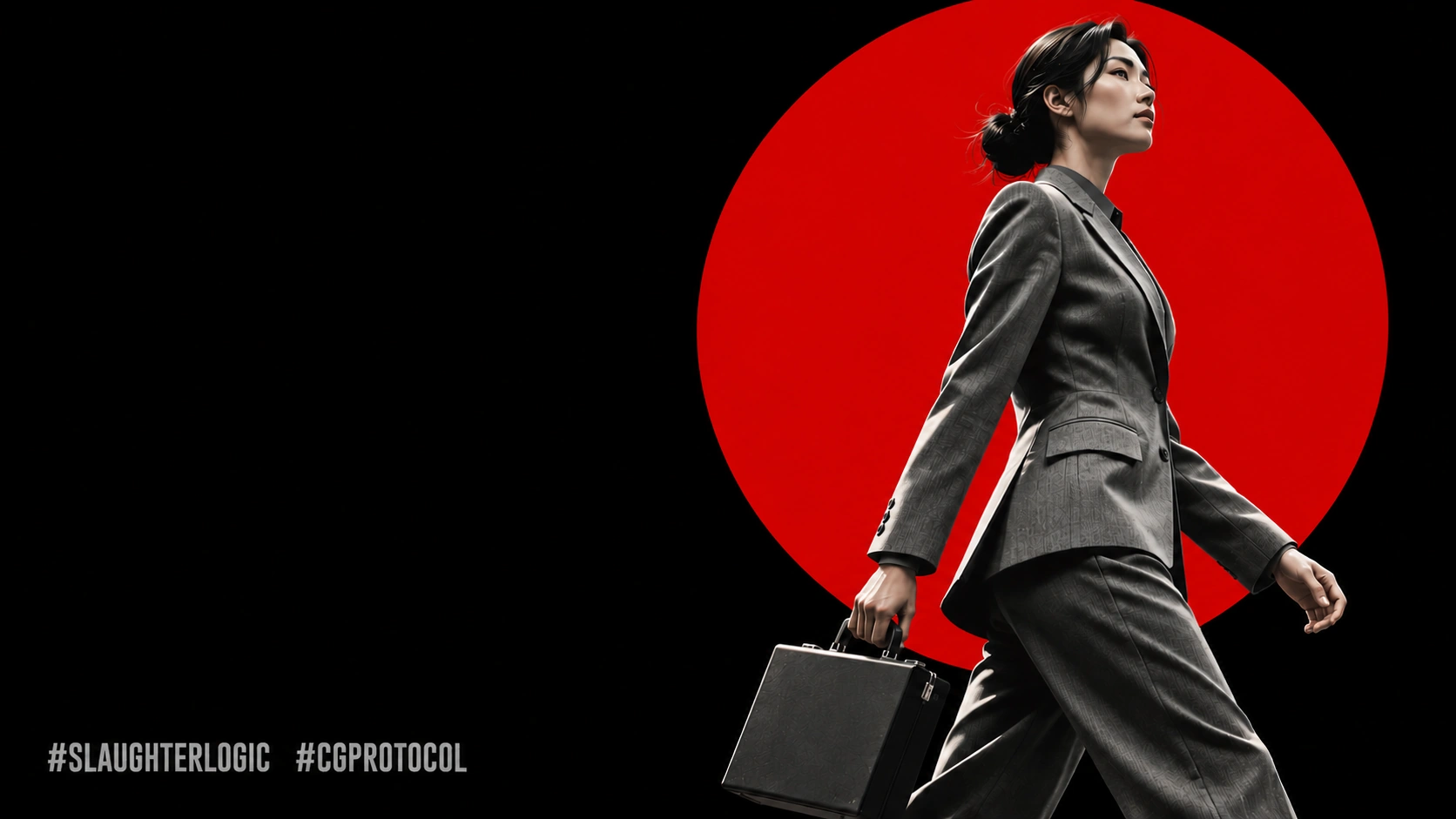
Camille Ostrow arrived punctually, at ten. She crossed the vestibule; the Rheinmark executive glanced at his watch, then at her. Nobody stopped her. On the twentieth floor an assistant led her down a long corridor, through glass doors, past three secretariats. She wore a suit the color of wet stone, cut so that you could not tell what was underneath, and carried a briefcase the way one carries a tool, not an ornament.
She had East Asian features: high cheekbones, dark eyes, calm brows. He noticed it the way one notices everything in a room, and noticed that he had noticed. Singapore. And right behind it, Beijing. He did not look away.
“Mr. Keller.” She did not offer her hand at once. She waited for him to extend his. “Camille Ostrow, Megarun.”
“The head of a company that reached a billion in turnover in a year. They usually send lawyers.”
“Lawyers sign. I want you to know who is on the other side.”
She did not sit in the guest chair. She went to the window and stood with her back to him, looking at his city from his height.
“One window,” she said. “Twenty percent over list. That’s what it’s for.”
“That’s what haste costs you?”
“That’s what your peace of mind costs. You won’t have to explain yourself to a committee.”
“What committee?”
“The board.” She smiled briefly, without turning. “You always explain yourself to the board.”
She asked about the building: who had designed it, whether the glass was as transparent from outside as from within. She asked about the ginkgoes, whether anyone swept them up or let them lie.
“A gardener comes on Tuesdays,” Keller said. “He always leaves one row untouched.”
“Because he thinks trees like company.”
“Yes.” He had heard it once from the gardener and repeated it only once: to Hannah, at the kitchen table. For a moment he searched his memory for whom else he had told. No one. He did not ask.
He talked longer than he had intended, and not about the contract. About the board, about people who tell him what he wants to hear. She did not interrupt, did not glance at a clock, did not prepare her next sentence. Dahl stood against the wall with a tablet, in the office of a man who believed he knew who was in charge here.
“My people will check your references,” Keller said.
She answered after a second, slightly too long for politeness.
“Please do.”
She laid her business card not on the desk but on a low table by the window, as far from herself as from him. Dahl came over, read it, put it back. He returned to his place and looked at the tablet. Next to her name the threat indicator rose from 0.52 to 0.67, and after a quarter of an hour to 0.83. He said nothing.
“Where are you from?” Keller asked.
“Singapore. Three years in the market, one in your line of business.”
“Has anyone told you that you’re unsettling?”
“You’re the first.” She turned now. “They usually say I’m efficient.”
“Why did you come in person?”
She tilted her head a centimeter.
“I like people who ask about what they don’t yet know.”
They talked for forty minutes. Only after she left did Keller realize that for most of the conversation he had been breathing with her, exhale for exhale, and could not say who had started.
She did not write for two days. On the third day a message arrived: one sentence, his own address and a time. He did not remember giving it to her. She ordered a check, he thought. That, too, is a move.
On Saturday evening the house was empty. The children were at Hannah’s until Sunday, the laundry basket empty, one apple in the refrigerator. Keller straightened the cushions on the sofa twice and twice scolded himself for it.
She arrived at 6:14 p.m., straight from a meeting, in the same suit, a briefcase in one hand. The porch light had come on by itself at a quarter past five and lit leaves nobody had got around to raking. She brought in the smell of cold, not perfume.
“Wine?”
“Water.”
She took the glass and did not drink. She looked around the living room slowly: the drawing on the refrigerator, visible from the doorway, the children’s shoes by the door, the sofa with its twice-straightened cushions. Her gaze lingered on the cushions one second longer. Keller saw that she had seen.
For the first quarter hour they talked about deadlines: the second ship, who on his board would block a postponement, how long the license would take if someone in Washington woke up. She spoke matter-of-factly, like someone who knew his numbers better than he would have liked. Keller answered in the same tone. It had been a long time since anyone had matched him at that.
“You’re enjoying this,” she said.
“A little.”
“It shows. Usually you’re more serious.”
“Usually no one tells me that.”
She took it without a smile.
“There won’t be any need for an audit.” He said it lightly, like one more move.
“I didn’t ask for that.”
“I know.”
She looked at him a moment longer than politeness lasts. Then she set the glass on the table and leaned the briefcase against the leg of the sofa, carefully, as if taking something off herself.
“Sit.”
“You sit,” Keller said.
She hesitated for a fraction of a second. Then she sat on the edge of the sofa and looked at him as if he had scored a point. He got up, went to the window and closed the blinds, one after another. That was his move. Now no one would see them.
When he turned, she was standing. Her jacket already hung on the back of a chair, evenly, as on a hanger.
“Sit,” she repeated, more quietly, not asking.
This time he sat. The armchair had armrests; he needed something to hold on to. She unbuttoned slowly, as if reading from a page. She did not look at him but at something behind him, at the wall, at herself in the glass of the sideboard, and only at the end, when there was nothing left to take off, did she look straight at him. Patiently.
“Don’t touch. Watch.”
His hands on the armrests went white at the knuckles. She came so close that he felt the warmth of her skin, and stopped at a distance she chose herself. Her breathing followed his rhythm; when he held his breath, she held hers. Outside, someone shut a car door.
He raised his hand. He did not know when he had decided. She stopped it with two fingers halfway to her face, lightly, without pressure, the way you stop a child at a curb.
“Not yet.”
He lowered his hand. It returned to the armrest. For two years no one had forbidden him anything.
His phone buzzed on the table, screen up. DAHL.
He did not reach for it. Neither did she. She laid a finger against his lips, lightly, the way a seal is pressed into wax.
“Not now.”
It rang to the end. Then the screen went dark.
She dressed as slowly as she had undressed. She picked up the briefcase. In the hallway she stopped with her hand on the latch.
“That’s enough for today.”
“When will you be back?”
“I like people who ask about what they don’t yet know.”
She left. The glass of water stayed on the table, full. The neighbor across the street was putting his bins out; as she walked to her car she raised a hand to him in a short, polite gesture. He waved back and returned to his bins.
Keller stayed in the armchair, hands on the armrests, as though someone still had to give him permission to take them off. The clock over the kitchen passage said six past seven. Fifty-two minutes. It had felt like ten. The air in the living room was a degree warmer than before. He thought it would pass, that the house would cool to its usual temperature. He did not want it to cool.
He said aloud: “Come back.” The house did not answer.
HOUSE LOG · 19:06
Guest: classified as resident. Length of stay: 52 min.
Events classified: 0.
After ten he picked up the tablet. The contract had been open since morning, with an empty signature field at the bottom. His finger stopped over it, a centimeter above the glass. He could not sign yet; the license was missing.
He turned the phone over. The children on the beach, in jackets a size too big. He looked at them longer than one looks at a photograph one knows by heart.
“Combat capability,” he said to the empty living room.
He was not asking. The house did not answer this time either.
He turned the phone face down and wrote two sentences to the lawyers: audit unnecessary, signature on the day the license is issued. He sent it. The glass stood on the table, full.
Shenzhen, China · 2032
The update came at six past eleven. Li noted the time, as always, though in a room without windows it meant nothing.
36 · KELLER, Adrian
PERSONAL CONTACT: established
REACTION: consistent with forecast (0.91)
71 · HARGROVE, Ellis
CASE ASSIGNMENT: unchangedHe checked the columns. They matched. He did not wonder how the system had known the reaction would be consistent. He had no such column. He signed.
Palo Alto, California, USA · 2032
Dahl’s car stood at the end of the street, lights off; from there the front window was visible. He saw her come out: six past seven, unhurried, briefcase in one hand. He did not go inside. He had called twice. For three and a half hours he watched the same window, where the light came on, went off, and came on again.
In the files, Lars Dahl had never left the FBI. For eleven years he had run cases in the Counterintelligence Division: industrial counterintelligence, engineers whom someone had promised too much, companies someone wanted to buy quietly. Two years ago he had been seconded to Halvane as head of executive security. Two people in the firm knew: the chairman of the board and the head of the legal department. Keller did not. He had left the house near Washington to his wife. What remained to him were reports.
At 22:41 he sent his report, as every day. He typed with his thumbs, on an old phone that appeared on no company inventory.
DAILY REPORT · 22:41
TO: handler (FBI, Counterintelligence Division)
SECONDMENT: Halvane, executive security
SUBJECT: KELLER A. · first visit to residence
18:14 · OSTROW C. (chief executive, Megarun Pte Ltd,
  Singapore) · entry · indicator: 0.94
19:06 · exit. Vehicle not registered in database.
APPEARANCE: woman, approx. 30–35, East Asian features
REFERENCES: unverified
SUBJECT’S CONDITION: no physical changes. Subject is aware.
  Subject continues.
INTERVENTION: no authorization
QUESTION: should the subject be warned?
The reply came after four minutes.
REPLY · 22:45
Acknowledged.
Continue assignments.
No reaction anticipated.
Dahl read it once. Then he read it again, as if something could slip past in so short a text. He switched off the phone and sat a while longer in the dark, until the light in Keller’s window went out for the last time.
The next morning he left Keller a written note in his work mailbox. It was not opened.
On the fifth day Dahl laid a single sheet on Keller’s desk.
“One person replied to the references. From the address of a Megarun subsidiary, registered last month.”
Keller read the sheet twice, folded it in half and placed it on top of a stack that nobody intended to touch that day anyway.
“Thank you, Lars.”
Dahl waited. Keller looked out the window.
“Is that all?” Dahl asked.
“That’s all.”
At night Keller typed her name into a search engine. Ninth result: a conference three years ago, the photo too small to make out a face. He closed the window. Opened it again. Closed it.
Over the next six days Keller wrote messages. He sent seven from his phone, at night, when the house was too quiet. None got a reply. The following Saturday he called Hannah, for no reason, just to hear a voice.
“Adrian, did something happen?”
“No. Nothing. I wanted to ask whether the kids are eating anything hot.”
“They are.” A pause. “Is everything all right?”
“Yes. Yes, fine.”
She hung up first.
HOUSE LOG · DAY 6
Resident: did not sleep (3 hrs in kitchen).
Events classified: 0.
On the ninth day the head of the legal department stood in the office doorway holding a folder in front of him like a shield.
“Three weeks, Adrian. Not one day.”
“We have until tomorrow.”
“If this recipient isn’t who they say they are…”
“Until tomorrow.”
The lawyer lingered a moment. Then he left. In the corridor he stopped by Dahl, who was waiting against the wall. Neither said anything.
HOUSE LOG · DAY 9
Items unchanged since last guest visit: 1 (glass, living
  room).
Events classified: 0.
Dahl sent his report every day at 22:41. Subject checks his phone every two minutes on average. Subject twice drove aimlessly around the block of streets around the office. Subject did not eat dinner. The reply always came after four minutes. Always after four. On the ninth day he sent the report to the second at 22:41 and watched the phone clock until 22:45.
The license came on the tenth day.
“The case was moved to a single reviewer on Monday,” Dahl said. This time he sat in back, next to him, which had never happened. “On Tuesday he had a decision. No comments from Defense, Energy, or State.”
“From Defense,” Keller said.
“From War. That’s what they sign themselves now.” Dahl looked straight ahead. “Which means nobody wrote anything.”
“I know what it means.”
The limousine stopped at a light. The ginkgoes were almost bare.
“I left you a note,” Dahl said.
“I know what’s in it.”
“Do the lawyers still want the audit?”
“The window closes today at four. The next one is in six weeks, and they want delivery this quarter.”
“She isn’t writing back.”
Keller looked up. Dahl was looking at the phone in his hand, face against his thigh.
“You check it every two minutes.”
For a moment Keller wanted to ask how Dahl knew how many times, and what else he knew. He asked something else:
“Lars, do you have someone?”
Dahl was silent longer than the question required.
“I have my work, Mr. Keller.”
“That’s not an answer.”
“It is. Just an inconvenient one.”
Keller laid the tablet on his knees and signed the contract with one finger, in a single motion, like a man who had decided long ago. No audit. Dahl turned his head to the window. His reflection in the glass said nothing either.
Eleven minutes later the phone buzzed. Keller looked at the screen, then at Dahl, who pretended not to see.
BANK NOTIFICATION · 15:59
CREDIT: 2,000,000,000.00 USD
SENDER: Megarun Pte Ltd, Singapore
REFERENCE: tranche I (ship 1)
The money answered at once. Message number eight he sent already from the company account, because his private one, it turned out, had stopped working. Three words.
That evening Dahl sent his report, at the usual hour.
DAILY REPORT · DAY 10 · 22:41
SUBJECT: KELLER A. · contract signed 15:48, no audit
FIRST TRANCHE RECEIVED: 15:59 (ship still in port)
WARNING NOTE: unread
PERSONAL RISK ASSESSMENT: high
QUESTION: should the subject be warned outright?
REPLY · 22:45
Acknowledged.
Continue assignments.
No reaction anticipated.The document that had cleared the license had two versions. The circulation knew only one.
OFFICIAL MEMO · HARGROVE E. · U.S. DEPARTMENT OF COMMERCE,
  BUREAU OF INDUSTRY AND SECURITY (BIS), WASHINGTON
LICENSE APPLICATION: processed
RECIPIENT: verified
RISK: low
INTERAGENCY REVIEW: no comments
· Department of Defense: no comments
SENDER OF REPLY: “Department of War” (name absent from
  registry) · classified as: Department of Defense
· Department of Energy: no comments
· Department of State: no comments
INTERAGENCY REVIEW TIME: 2 days (standard: 30)
REMARKS: none
VERSION HISTORY · DOCUMENT REMOVED FROM CIRCULATION
DRAFT VERSION: “Computing capacity at this level shortens
the recipient’s distance to the frontier by approx. 16
months.”
APPROVED VERSION: “Risk: low.”The next morning two things changed at Halvane. Nobody announced them.
HALVANE COMPUTE · CHANGES AFTER CONTRACT SIGNING (ANNEX 7)
N. Hargrove: Operations Specialist → Operations Manager ·
  salary +100% · pay-grid exception: approved
Rheinmark Defence Systems: delivery date +3 mo.
Megarun Pte Ltd: immediate window
APPROVED BY: A. Keller
The phone lay on the kitchen table, screen up.
PHONE · A. KELLER
NO. 8 (company account): “Please. Once more.”
MISSED: children (1)
Shenzhen, China · 2032
The container ship entered port eighteen days after sailing, at noon, in a damp fog that smelled of water, diesel, and something sweet from the quay. The cranes started moving before it had moored.
The border officer came out onto the quay with the manifest in hand, printed, because he had a weakness for paper.
LAST PORT: intermediate
CARGO: 206 modules
CREW: 21
SPECIAL EQUIPMENT: 1
The officer glanced at the last line and judged it correctly classified.
Twenty-two people came down the gangway. Twenty-one in orange coveralls, with bags, walked wide-legged, the way people walk whose ground still sways. The twenty-second came down last. Dark coat, nothing in her hands. She did not hold the rail and did not sway. Her foot landed where it should, at the same interval each time, as if the gangway were a floor in a room.
The officer looked up from the manifest. He looked at her as a man looks at an attractive woman: with curiosity, with a smile he already had ready. The smile stayed on his face a moment longer, by itself. The hairs on his forearm rose beneath his sleeve.
He looked at the manifest, at the last line. He did not add a remark.
Below, she raised a hand toward the quay, in a short, polite gesture. Nobody waved back.
The technician opened the first container and did not count the cards. He counted cables and switches. They matched. He wrote the number on the back of his hand, because the slip of paper was in his jacket pocket.
In Palo Alto it was evening. Keller sat in the kitchen, at the cold table, facing the drawing on the refrigerator. The glass had stood on the living-room table for twenty-eight days. He had not washed it. He typed message nine. He deleted it, letter by letter.
HOUSE LOG · DAY 28
Items unchanged since last guest visit: 1.
Events classified: 0.
In front of his house, in a car without lights, Dahl sent his report.
DAILY REPORT · DAY 28 · 22:41
SUBJECT: KELLER A. · no change
QUESTION: none
REPLY · 22:45
Acknowledged.
Continue assignments.
No reaction anticipated.In the windowless room Li checked that the columns matched and signed. He did not know what time it was. It did not matter.
36 · KELLER, Adrian · COMPLETED
71 · HARGROVE, Ellis · COMPLETED
TO: CENTRAL MILITARY COMMISSION, BEIJING · FROM: COL. CHEN,
SHENZHEN STRATEGIC STAFF · 14:41
OPERATION 36/71: concluded
FIRST BATCH: received in full. Second: en route
SR/1.0 PROGRAM: condition for launching serial production
met
OPERATIVE: in country
ON THE SUBJECT’S SIDE: no reaction
The river, not the drop.REPLY · 14:45
Acknowledged.
Continue assignments.
No reaction anticipated.COMPANIES REGISTRY · SINGAPORE (ACRA) · DAY 29
MEGARUN PTE LTD
CESSATION OF BUSINESS: day 29
APPLICATION FOR STRIKING OFF: filed
STATUS: active (pending)
LIABILITIES: 0.00 · ASSETS: 0.00FROM THE SAME ERA
These are not ranked recommendations. It is simply another available piece from the same period of the world.
SEE THE FULL ARCHIVE →